Just have a look at the state of our world today, and you can relate to the increasing social divisions, political polarization, environmental strain, and creeping sense of isolation. With every day passing by, the situation is getting worse, and it is out of our hands. While tackling this, we look to massive systemic overhauls or technological breakthroughs to save us, forgetting that the root of our global challenges is fundamentally human. Making this world a better place for everyone requires a paradigm shift in how we relate to one another, how we view our responsibilities, and how we draw from the deep wells of global wisdom.
Here are 8 essential things we can do to transform our world into a more compassionate, equitable home for all:
1. Cultivate and Honor Our Shared Humanity
At the core of every social injustice, conflict, and division is the dangerous illusion that “the other” is somehow less human than we are. To make the world better, we must champion our shared humanity. We should recognize that beneath cultural, national, and ideological differences, we share the same fundamental desire for dignity, peace, and belonging. When we view every human being as inherently valuable, cruelty and neglect become impossible to justify.
2. Embrace Relational Living Over Hyper-Individualism
Modern society has built an obsession with hyper-individualism, teaching us to look out solely for ourselves. To heal our communities, we must return to a relational worldview that understands that no individual or nation stands alone. By recognizing that our well-being is inextricably bound to our neighbors’ well-being, we can build societies rooted in mutual care rather than ruthless competition.
3. Listen to and Learn from Non-Western Traditions
True global progress cannot happen when we rely on a single cultural lens. We must actively listen to and integrate non-Western intellectual, spiritual, and philosophical traditions. Indigenous wisdom offers profound insights into environmental stewardship, communal harmony, and holistic human development that can rescue modern society from its current blind spots.
4. Foster Genuine Intercultural and Interreligious Dialogue
We must foster spaces of intercultural and interreligious dialogue where people can exchange ideas without fear, bias, or the desire for cultural dominance. True dialogue requires humility and we have to inherit the willingness to admit that no single culture holds a monopoly on truth.
5. Prioritize Empathy and Psychological Wholesomeness
A better world requires emotionally and rationally balanced individuals who practice empathy. When we cultivate inner peace, self-reflection, and emotional maturity, we stop projecting our internal conflicts onto the outer world. Empathy allows us to walk in another person’s shoes and respond to suffering with compassionate action rather than judgment.
6. Protect Human Dignity Against Marginalization
Every person possesses an unassailable, intrinsic dignity that cannot be stripped away by social status, race, or external metrics. Making the world a better place means actively standing up for the marginalized, ensuring that societal systems uplift the vulnerable rather than crush them, and treating every individual as “someone” rather than “something”.
7. Balance Personal Freedom with Collective Responsibility
While individual freedom is a vital pillar of a flourishing life, it must never be exercised at the community’s total expense. We must learn to balance personal ambition with a deep sense of responsibility toward the collective good. Freedom without responsibility leads to exploitation; freedom paired with collective care leads to justice.
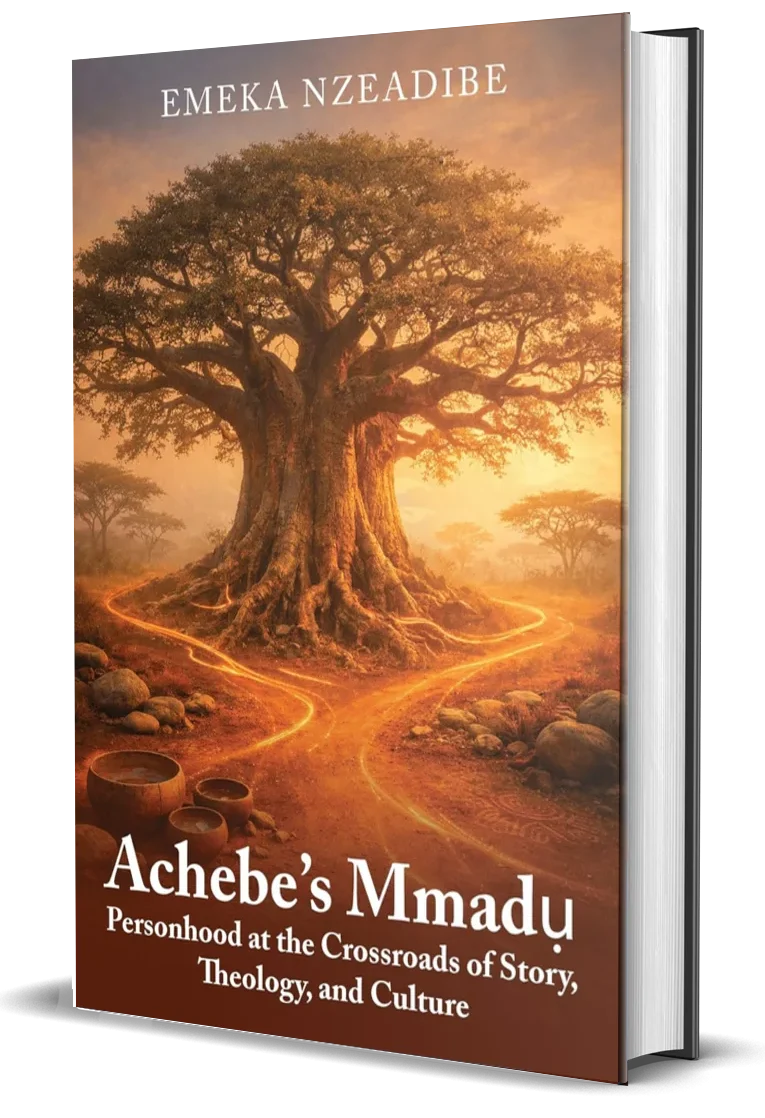
Speaking of shared humanity and empathy, stories can shape reality, break down prejudice, and expand our moral imagination, and if you are looking for a profound literary and philosophical guide to help you reflect on human dignity, community, and relationality, you should read Achebe’s Mmadụ: Personhood at the Crossroads of Story, Theology, and Culture.
In a twenty-first-century global society increasingly plagued by hyper-individualism, alienation, and social fragmentation, the Igbo philosophy of Mmadụ offers a powerful corrective. It reminds us that human dignity is not earned through ruthless self-reliance, nor is it a solitary mental construct. True personhood is an ongoing, dynamic journey of becoming—realized through our responsibilities to one another, our rootedness in community, and our recognition that wherever we stand, we stand in vital, sacred relation to others.
Achebe’s Mmadụ offers a timely message for a divided world. Emeka Nzeadibe invites readers to move beyond the conflict between self and society and embrace a vision of humanity grounded in relationship, freedom, responsibility and dignity. Through Achebe’s stories, the human person appears not as an isolated self or a faceless member of a group, but as someone who becomes fully human in meaningful connection with others.
Read the book on Amazon: https://a.co/d/0363OG8A
Visit the Author’s Official Website: https://achebesmmadu.com/