In a globally interconnected world, education, philosophy, and theology have long defaulted to Eurocentric frameworks. They are asking us to treat Western thought as the universal standard for human knowledge and, basically, a standpoint for everything we do. However, relying on a single intellectual tradition can limit our capacity, and we may fail to address complex modern challenges on our own. When you train your mind to opt for non-Western intellectual traditions, it includes learning about the traditions of different cultures, which promotes human intellectual growth and shared humanity, as we can learn by reading Achebe’s Mmadụ: Personhood at the Crossroads of Story, Theology, and Culture.
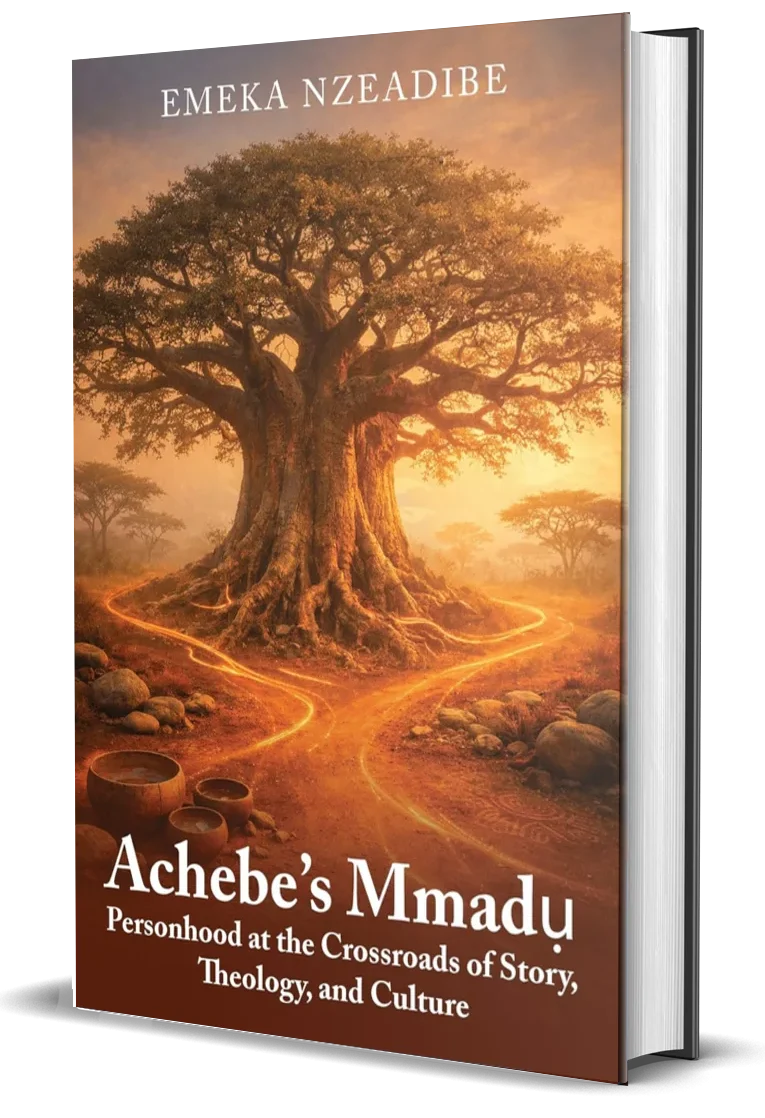
Achebe’s Mmadụ: Personhood at the Crossroads of Story, Theology, and Culture invites readers into a profound encounter between Igbo cosmology, Christian theology, and Chinua Achebe’s literary imagination. What begins as a personal search for meaning unfolds into an exploration of the spiritual and philosophical depth of Igbo understandings of the human person, set alongside the Christian vision of the imago Dei. The book highlights Achebe’s evocative image of the dancing mask and the Igbo proverb Ife kwụlụ, ife akwụdebe ya—“where something stands, something else stands beside it.” This metaphor captures an Igbo worldview that honours multiplicity, layered truth, and relationality and poses a question shared across cultures and traditions: What does it mean to be human?
That said, here are 5 reasons why we should actively embrace non-Western intellectual traditions:
- Challenging Eurocentric Biases and Assumptions
Relying solely on Western paradigms often blinds us to alternative ways of organizing society, understanding nature, and defining human rights and dignity. Non-Western frameworks challenge these hidden biases and reveal overlooked dimensions of reality. - Embracing Relational Over Hyper-Individualistic Models
While Western philosophies frequently prioritize isolated autonomy and hyper-individualism, many non-Western traditions—such as Igbo cosmology—place human relationality and community at the center of existence. This offers a vital antidote to modern alienation and social fragmentation. - Fostering Genuine Intercultural Dialogue
True global progress requires mutual listening rather than cultural imposition. Engaging with non-Western thoughts allows for a true dialogical interface where different traditions mutually enrich one another without syncretism or erasure. - Reclaiming Depersonalized Histories and Dignity
Colonial and imperial histories systematically devalued indigenous intellectual depth, often portraying non-Western cultures as devoid of philosophy or history. Embracing these traditions acts as an act of intellectual restoration, returning dignity and voice to historically marginalized narratives. - Enriching Global Theological and Philosophical Discourse
Complex questions surrounding ethics, ecology, personhood, and the transcendent cannot be fully solved by one culture alone. Integrating non-Western concepts—such as the interplay between human agency and spiritual destiny—expands our collective toolbox for addressing twenty-first-century crises.
Head to Amazon to read this book: https://www.amazon.com/dp/B0GZFB5P25/
Visit the Author’s Official Website: https://achebesmmadu.com/